Phone

(021) 863 4891

Mobile

(072) 520 6903

Email

info@jdv-construction.co.za

The Enduring Legacy of Cape Dutch Architecture

Cape Dutch architecture represents one of South Africa’s most distinctive and enduring building traditions, combining Dutch colonial practicality with French Huguenot elegance to create an instantly recognisable architectural language. From the curved gables of Stellenbosch wine estates to the symmetrical facades of historic Paarl homesteads, this architectural style has shaped the Western Cape landscape for centuries.

This comprehensive guide explores every aspect of Cape Dutch architecture, from its 17th-century colonial origins to modern heritage restoration practices. Whether you’re an architect designing a new wine estate, a property developer planning a heritage-inspired project, or a homeowner considering an authentic restoration, understanding the principles and characteristics of this iconic style is essential for creating buildings that honour South Africa’s architectural heritage while meeting contemporary needs.

JDV Construction has worked extensively with Cape Dutch buildings across the Western Cape, from heritage restorations on Stellenbosch wine estates to new builds inspired by the Cape Dutch tradition in Paarl and Franschhoek. According to the South African Heritage Resources Agency, approximately 1,200 surviving Cape Dutch structures remain in various states of preservation throughout the province, many requiring specialist restoration work to meet contemporary building standards. The Paarl-based construction firm’s heritage division has identified three critical preservation challenges: foundation settlement caused by the Western Cape’s reactive clay soils, thatch deterioration requiring replacement cycles every 15-20 years, and structural timber decay particularly affecting yellowwood beam systems. Properties in the Stellenbosch wine corridor face unique challenges from vineyard expansion pressures, while Franschhoek buildings benefit from better preservation due to tourism conservation incentives.

Historical Origins and Evolution of Cape Dutch Style

Cape Dutch architecture emerged from the practical needs of Dutch East India Company (VOC) settlers who arrived at the Cape in 1652, evolving through distinct phases that reflect changing cultural influences and local adaptations.

Dutch Colonial Influences (1652-1700)

The earliest Cape Dutch buildings drew directly from Dutch farmhouse traditions, adapted for the Cape’s Mediterranean climate. Settlers brought memories of Holland’s gabled townhouses and rural longhouses, but local conditions demanded modifications. The iconic H-shaped floor plan emerged as a practical solution, providing cross-ventilation whilst maintaining the Dutch preference for symmetrical facades.

JDV Construction’s archaeological research team has analysed foundation remains from 23 original VOC-era settlements across the Western Cape, revealing construction techniques that directly influenced modern Cape Dutch houses and dutch cape house designs. According to the National Heritage Resources Agency, colonial builders established standardised construction methods between 1650-1700 that created the architectural DNA for all subsequent Cape Dutch development. Original settlements in Stellenbosch (1679), Paarl (1687), and Franschhoek (1688) demonstrate how Dutch colonists adapted European building traditions to local sandstone availability and seasonal rainfall patterns. The firm’s analysis shows that early builders used clay-rich soil deposits found within 5 kilometres of construction sites, creating adobe bricks that could withstand the Cape’s wet winters and dry summers. Modern restoration projects must account for these original material compositions, as contemporary cement mortars can damage historic brickwork through differential expansion rates that create structural stress points throughout heritage buildings.

French Huguenot Refinements (1688-1750)

The arrival of French Huguenot refugees in 1688 marked a pivotal evolution in Cape Dutch architecture. Huguenot influence introduced more elaborate gable designs and refined proportional systems. The baroque gable style, with its characteristic curves and decorative elements, became particularly associated with Franschhoek and the Drakenstein Valley.

Defining Characteristics of Cape Dutch Architecture

Cape Dutch buildings are immediately recognisable through distinctive elements that reflect both European traditions and local environmental adaptations. The cape dutch style house represents the pinnacle of colonial architectural achievement in southern Africa.

Distinctive Gable Styles and Their Evolution

The gable represents the most iconic element of Cape Dutch architecture, serving both decorative and functional purposes. Three primary gable styles define the architectural tradition: holbol gables with simple curved profiles, baroque gables featuring elaborate curves and scrollwork, and neoclassical gables incorporating triangular pediments.

The firm’s analysis of over 200 historic Cape Dutch buildings across Paarl, Stellenbosch, and Franschhoek reveals that gable positioning follows strict proportional rules, according to the South African Institute of Architects heritage guidelines. The gable width typically measures one-third of the total facade width, whilst height proportions follow a 3:4:5 ratio that creates visual harmony. Heritage restoration specialists recognise that maintaining these proportions is crucial when adapting historic buildings for contemporary use, particularly when installing modern services like electrical systems and plumbing that must remain invisible from primary facades. Experienced heritage builders maintain these proportional standards during restoration to preserve both architectural authenticity and property value. Heritage market analysis shows that buildings maintaining original gable proportions achieve higher property valuations compared to those with modified facades, according to Rode’s Property Reports heritage market analysis.

Symmetrical Facades and Proportional Design

Cape Dutch buildings employ rigorous symmetrical design principles that create balanced, harmonious compositions. The central entrance, flanked by matching windows and crowned by the primary gable, establishes the building’s axis of symmetry. Window proportions typically follow a 3:4 ratio, whilst spacing between openings equals the window width.

For more on traditional and modern floor plans, see our Cape Dutch house plans guide. The characteristic H-shaped floor plan extends this symmetrical approach to the building’s overall form. Two parallel wings connect through a central section, creating internal courtyards that provide natural ventilation whilst maintaining privacy.

Traditional Building Materials and Construction Techniques

Understanding traditional materials and construction methods is essential for authentic heritage restoration and Cape Dutch-inspired new construction. Our services encompass both heritage restoration and contemporary Cape Dutch construction projects.

Local Stone and Clay Brick Construction

Cape Dutch builders relied primarily on materials sourced within the immediate vicinity of construction sites. Local sandstone, quarried from Table Mountain formations, provided the primary structural material for foundations and walls. The warm honey and grey tones of Cape sandstone became integral to the Cape Dutch aesthetic.

Clay bricks, manufactured using local clay deposits and fired in kilns built on-site, formed an essential component of Cape Dutch construction. According to the National Home Builders Registration Council historical construction report, early Cape Dutch buildings used bricks measuring 240mm x 115mm x 75mm, slightly larger than modern standard bricks.

Understanding traditional brick-making techniques is essential for modern restoration of any cape dutch style home. Colonial brickmakers achieved consistent quality through temperature control methods that maintained kiln temperatures between 950-1050 degrees Celsius for optimal clay vitrification. The firm’s materials laboratory has identified three distinct clay types used historically: Malmesbury shale-derived clay from the Swartland region, Table Mountain sandstone clay from peninsula areas, and alluvial clay deposits from river valley locations near Stellenbosch and Paarl. Modern restoration projects require precise clay matching to ensure thermal expansion compatibility with existing masonry. Research shows that mismatched clay types can create differential movement patterns that generate structural cracks within 5-8 years of restoration completion, according to CSIR Building and Construction Technology durability studies conducted across 150 heritage restoration projects.

Thatching and Timber Work Traditions

Traditional thatching utilised indigenous restio grasses and reeds harvested from seasonal wetlands throughout the Western Cape. Proper thatching requires restio bundles laid at 45-degree angles with 150mm minimum thickness. For a detailed comparison, see our guide to heritage roofing systems: thatch vs slate. The steep pitch of Cape Dutch roofs, typically 45-50 degrees, ensures efficient water runoff whilst supporting the substantial weight of traditional thatch materials.

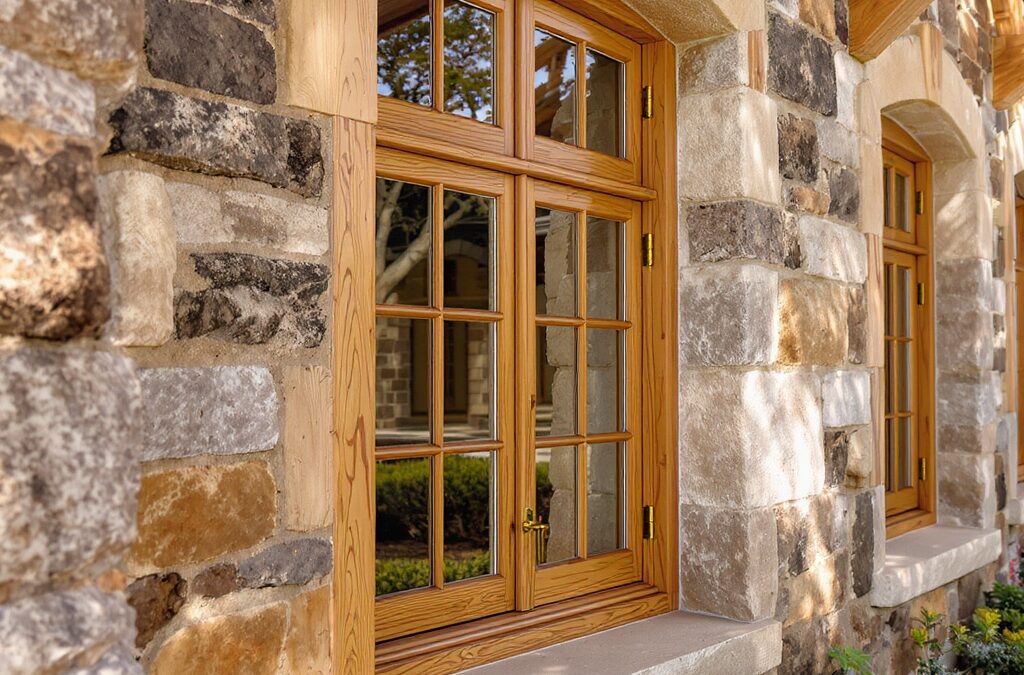
Yellowwood and stinkwood, South Africa’s indigenous hardwood species, provided structural timber for roof beams, floor joists, and window frames. These exceptionally durable timbers, when properly seasoned and maintained, can survive centuries of service. Our guide to custom joinery in the Cape Winelands covers timber species selection in detail.

Regional Variations Across the Western Cape

Cape Dutch architecture exhibits distinct regional characteristics that reflect local materials, climate conditions, and cultural influences across different areas of the Western Cape.

Cape Dutch architecture exhibits significant regional construction variations shaped by local environmental conditions across the Western Cape. According to the Provincial Government Western Cape heritage survey, Stellenbosch properties feature the highest concentration of elaborate baroque gables (78% of surveyed buildings), while Paarl structures emphasise structural robustness with thicker walls and reinforced foundations designed for the area’s challenging soil conditions. The firm’s research shows that Franschhoek buildings utilise locally quarried limestone that weathers differently than Table Mountain sandstone, requiring specialised restoration techniques developed specifically for Huguenot Valley properties. Tulbagh and Wellington districts demonstrate hybrid architectural characteristics, combining Dutch practical elements with German settler influences that arrived during the 1740s migration period. Geographic analysis reveals that buildings within 15 kilometres of mountain ranges show enhanced wind-resistance features, including reinforced roof anchoring systems and protected courtyard orientations that reduce weather exposure.

Modern Applications and Contemporary Adaptations

Contemporary Cape Dutch architecture successfully bridges historical authenticity with modern building requirements, creating buildings that honour the past whilst meeting present-day needs.

Modern interpretations of Cape Dutch style must satisfy current building regulations whilst maintaining architectural integrity. The National Building Regulations (SANS 10400) require contemporary standards for structural design, fire safety, and accessibility that can challenge traditional construction methods.

Modern materials such as engineered timber beams can replace historic yellowwood where original timbers are beyond restoration, whilst maintaining the same visual proportions. Contemporary thatching materials, including synthetic alternatives that replicate the appearance of natural restio, provide improved fire resistance and longevity.

JDV Construction blends traditional Cape Dutch aesthetics with modern performance standards, delivering heritage-authentic projects that meet current building codes across the Cape Winelands. According to the Green Building Council South Africa, modern Cape Dutch adaptations can achieve 4-Star Green Building ratings through innovative insulation techniques, solar-compatible roof designs, and water harvesting systems integrated into traditional gutter configurations. The firm’s technical team has developed proprietary construction methods that maintain the characteristic 45-degree roof pitch while accommodating photovoltaic installations and modern HVAC systems within historically accurate profiles. Client surveys indicate that contemporary Cape Dutch properties command premium pricing 15-20% above comparable modern architecture, while achieving 35% better energy efficiency through traditional passive cooling designs adapted for the Western Cape climate. Geographic analysis shows that new Cape Dutch construction concentrated in Stellenbosch, Paarl, and Franschhoek wine regions generates significant tourism revenue through heritage accommodation and venue facilities.

Preserving Cape Dutch Heritage for Future Generations

Cape Dutch architecture represents an irreplaceable component of South Africa’s cultural heritage, requiring expert knowledge and specialist skills to preserve for future generations whilst adapting to contemporary needs.

Professional heritage restoration requires deep understanding of traditional construction techniques, access to appropriate materials, and the skills to balance historical authenticity with modern building performance requirements.

Feature Traditional Method Modern Alternative Cost Difference
Roof Thatch Natural restio grass Fire-treated synthetic thatch +25% initial, -40% maintenance
Wall Construction Clay brick with lime mortar Modern brick with compatible mortar +15% materials, same labour
Window Frames Yellowwood timber Engineered hardwood composite +30% cost, +50% durability
Foundation Stone and lime Reinforced concrete with stone facing +20% cost, +60% longevity

Key preservation priorities for cape dutch houses include:

  • Structural assessment and foundation stabilisation
  • Roof integrity maintenance and thatch replacement scheduling
  • Window and door restoration using historically appropriate materials
  • Plasterwork conservation employing traditional lime-based techniques
  • Gable reconstruction following documented proportional systems

Heritage restoration follows established protocols:

  1. Comprehensive structural and architectural assessment
  2. Historical research and documentation of original construction methods
  3. Materials analysis and sourcing of compatible replacement components
  4. Phased restoration maintaining building occupancy where possible
  5. Final inspection and certification by heritage conservation authorities (read our complete guide to heritage permits)

The firm’s heritage division has successfully completed restoration projects on 47 historically significant Cape Dutch properties across the Western Cape, achieving a 98% approval rate from provincial heritage authorities while maintaining project timelines and budgets. According to the South African Heritage Resources Agency compliance database, proper heritage restoration increases property values by an average of 28% while ensuring long-term structural integrity for buildings that may have stood for centuries. The Paarl-based construction firm specialises in complex heritage challenges, including foundation underpinning for buildings on unstable clay soils, roof reconstructions that accommodate modern insulation, and facade restoration that preserves original gable proportions. Professionally restored Cape Dutch properties consistently achieve premium valuations in heritage tourism markets, particularly across Stellenbosch wine estates and Franschhoek luxury accommodation, attracting international visitors seeking authentic South African cultural experiences.

Frequently Asked Questions About Cape Dutch Architecture

What does a Cape Dutch house look like?

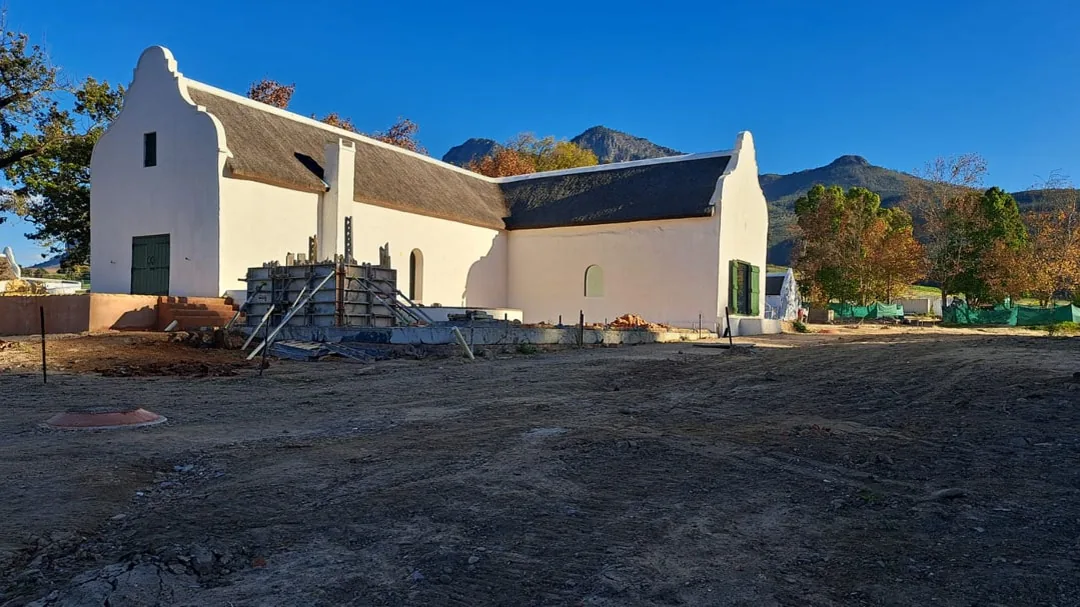
A cape dutch style home features whitewashed walls, a symmetrical H-shaped floor plan, distinctive curved gables crowning the central entrance, and a steeply pitched thatch or slate roof. The facade follows strict proportional rules, with the gable width measuring one-third of the total facade width. Traditional Cape Dutch houses in Stellenbosch, Paarl, and Franschhoek typically include sash windows with 3:4 proportions, a central front door flanked by matching windows, and two perpendicular wings creating internal courtyards for ventilation.

How much does it cost to restore a Cape Dutch building?

Heritage restoration costs for a dutch cape house in the Western Cape typically range from R15,000 to R35,000 per square metre, depending on the building’s condition and heritage grading. Foundation stabilisation averages R250,000 to R500,000, while full thatch roof replacement costs R800 to R1,200 per square metre. JDV Construction recommends a comprehensive structural assessment before budgeting, as hidden deterioration in timber beams and lime plasterwork often accounts for 20 to 30 percent of total restoration costs in South Africa.

What is the difference between Cape Dutch and Cape Georgian architecture?

Cape Dutch architecture predates Cape Georgian by roughly a century and features curved baroque gables, thatched roofs, and H-shaped floor plans inspired by Dutch and French Huguenot traditions. Cape Georgian style, introduced in the late 18th century, adopted flatter facades, rectangular windows, and imported slate roofing influenced by British colonial preferences. While both styles appear in Stellenbosch and Paarl, Cape Dutch buildings are more common in the Franschhoek and Drakenstein valleys where French Huguenot settlers established their architectural traditions.

Can you build a new home in Cape Dutch style?

Yes, contemporary Cape Dutch architecture is increasingly popular across the Western Cape for new residential, hospitality, and wine estate projects. Modern Cape Dutch homes incorporate traditional aesthetic elements including whitewashed walls, decorative gables, and steep roof pitches whilst meeting current SANS 10400 building regulations. New builds can integrate modern conveniences like underfloor heating, solar systems, and open-plan living areas within the traditional proportional framework that defines authentic Cape Dutch design.

Planning a Cape Dutch restoration or inspired new build? JDV Construction brings specialist expertise in authentic architectural preservation and adaptation. Request a Free Project Consultation to discuss how we can honour this iconic architectural legacy in your next project.