Reach out to us
Send us an enquiry
Take the first step – Send us an enquiry about your exciting new construction project today!
(021) 863 4891
(072) 520 6903
info@jdv-construction.co.za
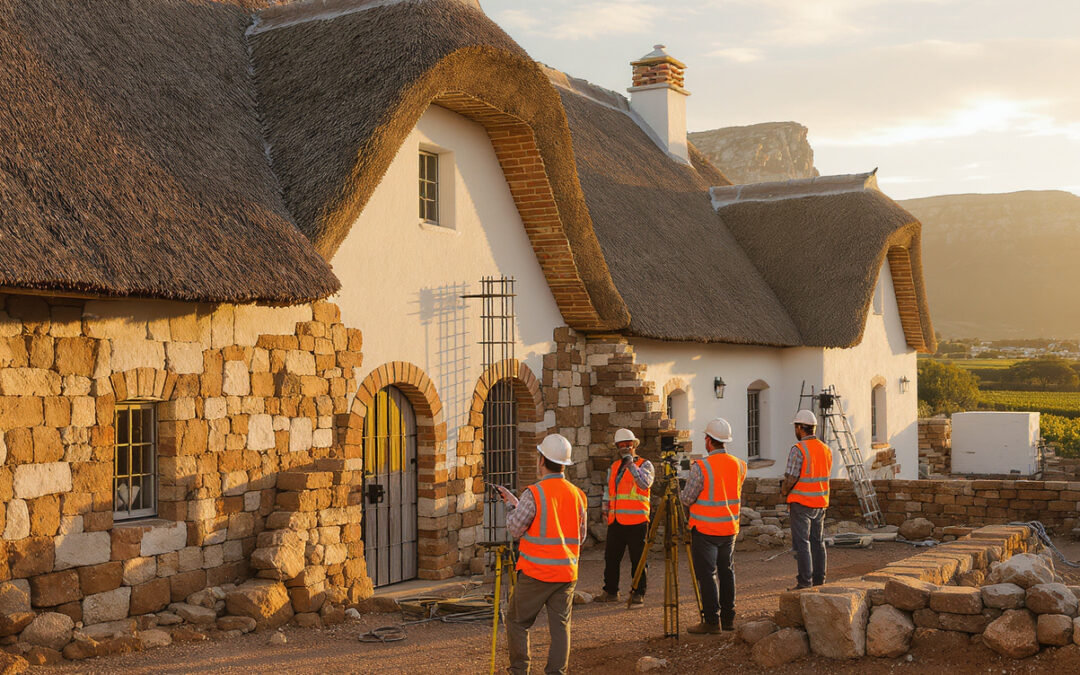
Structural strengthening in heritage buildings is like performing surgery on a masterpiece. Moreover, the process of structural strengthening heritage buildings presents a unique paradox: how do you enhance performance while maintaining that authentic character that makes these buildings historically significant? Unlike modern construction where engineers can freely replace elements, heritage buildings demand a fundamentally different approach that respects their original DNA. Furthermore, this challenge becomes particularly complex when dealing with heritage renovation services such as Cape Dutch restoration projects or historical farmhouse restoration in wine estates, where architectural authenticity is paramount.
The preservation-performance paradox affects everything from Victorian manor houses to Art Deco commercial buildings. Additionally, heritage building restoration requires balancing structural safety with historical integrity. Consequently, property owners must navigate between contemporary building codes and conservation principles that protect cultural heritage.
Heritage property owners frequently find themselves caught between modern safety requirements and preserving historical authenticity. This balancing act requires careful consideration of both engineering demands and conservation principles. Traditional construction methods, whilst remarkably durable, may not meet current structural performance expectations for modern usage patterns.
The tension between preservation and performance creates unique challenges in heritage projects. Therefore, structural engineers must understand both historical construction methods and contemporary safety standards. Historical authenticity preservation becomes the guiding principle that shapes every decision.
Traditional materials like lime mortars and hand-forged ironwork were chosen for specific reasons by original builders. However, these materials may not always provide the load-bearing capacity required for modern building usage. Consequently, engineers must find creative structural strengthening solutions that enhance performance without compromising character.
Conventional structural strengthening approaches often involve significant alterations that can irreversibly damage heritage character. Steel jacketing, concrete encasement, and other standard methods typically alter the visual appearance and structural behaviour of historic buildings. Therefore, these approaches can destroy the very qualities that make heritage buildings worth preserving.
Moreover, aggressive interventions can disrupt the natural movement patterns that historic buildings have developed over decades or centuries. This disruption often leads to unexpected structural problems elsewhere in the building. Subsequently, the cure becomes worse than the original problem.
Successful heritage strengthening projects begin with thorough assessment that maps both historical significance and structural condition. Furthermore, this assessment-first approach ensures that interventions respect the building’s heritage value while addressing performance requirements.
The assessment process starts with extensive research into the building’s history and original construction methods. Additionally, this research provides crucial insights that inform structural strengthening strategies.
This documentation phase often reveals surprising insights about the building’s construction. For instance, many Cape Winelands construction projects from the colonial era used innovative techniques that are still structurally sound today. Similarly, historical building renovation projects frequently uncover hidden structural elements that influence strengthening approaches and load paths.
Modern assessment techniques allow engineers to evaluate structural condition without damaging historic fabric. Therefore, non-destructive testing becomes essential for heritage projects.
Consequently, this evaluation provides the technical foundation for developing appropriate structural strengthening strategies. The data collected helps engineers understand how the building currently performs and where interventions are most needed.
Material compatibility testing ensures that new strengthening materials work harmoniously with original construction. Additionally, this testing prevents adverse chemical reactions that could damage historic fabric.
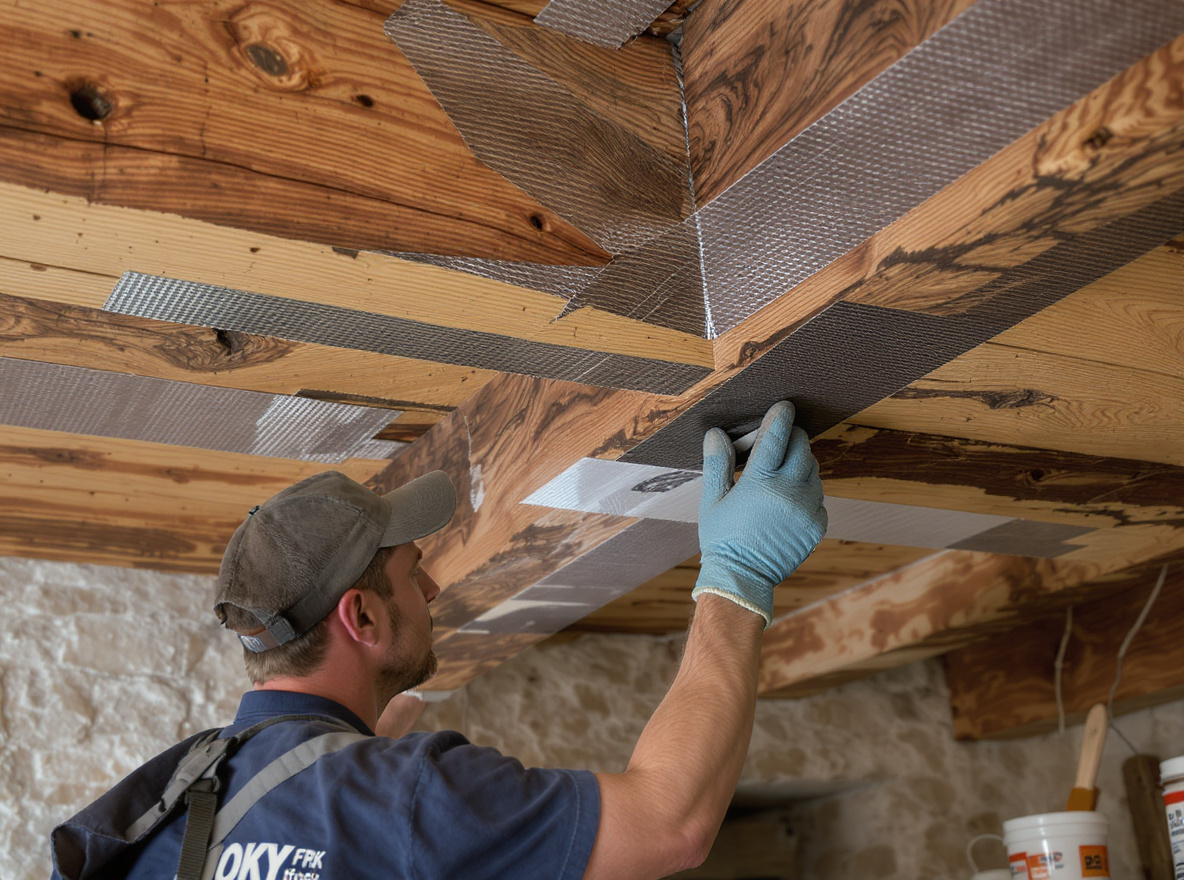
Craftsperson applying translucent FRP reinforcement strips to heritage timber beam, showing invisible structural strengthening technique
Fiber reinforced polymer technology represents a revolutionary approach to heritage building structural strengthening. Moreover, FRP systems can provide significant structural enhancement while remaining virtually invisible, making them ideal for character preservation applications.
FRP systems consist of high-strength fibres embedded in polymer matrices that bond directly to existing structural elements. These lightweight materials deliver exceptional strength-to-weight ratios while maintaining flexibility that accommodates the natural movement of heritage structures. Furthermore, the technology offers unprecedented opportunities for invisible strengthening.
The polymer matrix protects the fibres from environmental degradation while distributing loads across the substrate. Additionally, different fibre types provide specific performance characteristics. Carbon fibres offer maximum strength, glass fibres provide cost-effective solutions, and basalt fibres deliver excellent durability.
| FRP Application | Heritage Benefit | Typical Use | Installation Impact |
|---|---|---|---|
| External bonding | Minimal visual impact | Beam and column strengthening | Reversible if required |
| Near-surface mounting | Partially hidden installation | Tension reinforcement | Minimal surface preparation |
| Internal bonding | Complete invisibility | Masonry strengthening | No visual alteration |
| Fabric wrapping | Confinement strengthening | Column rehabilitation | Paintable surface finish |
FRP strengthening offers superior performance characteristics compared to conventional approaches. Therefore, these systems provide enhanced load capacity without adding significant weight or altering structural geometry. The non-corrosive nature of FRP materials ensures long-term durability in various environmental conditions.
Unlike steel reinforcement, FRP materials do not corrode or expand when exposed to moisture. Consequently, they provide long-term stability without ongoing maintenance concerns. Additionally, the lightweight nature of FRP systems reduces dead loads on existing foundations.
Proper installation techniques are crucial for successful FRP structural strengthening of heritage buildings. Surface preparation must be carefully executed to avoid damaging historic fabric. Furthermore, installation methods should be reversible whenever possible to comply with conservation principles.
The installation process typically involves surface cleaning, primer application, and careful positioning of FRP materials. Temperature and humidity conditions must be carefully controlled during installation. Subsequently, protective coatings may be applied to match existing finishes.
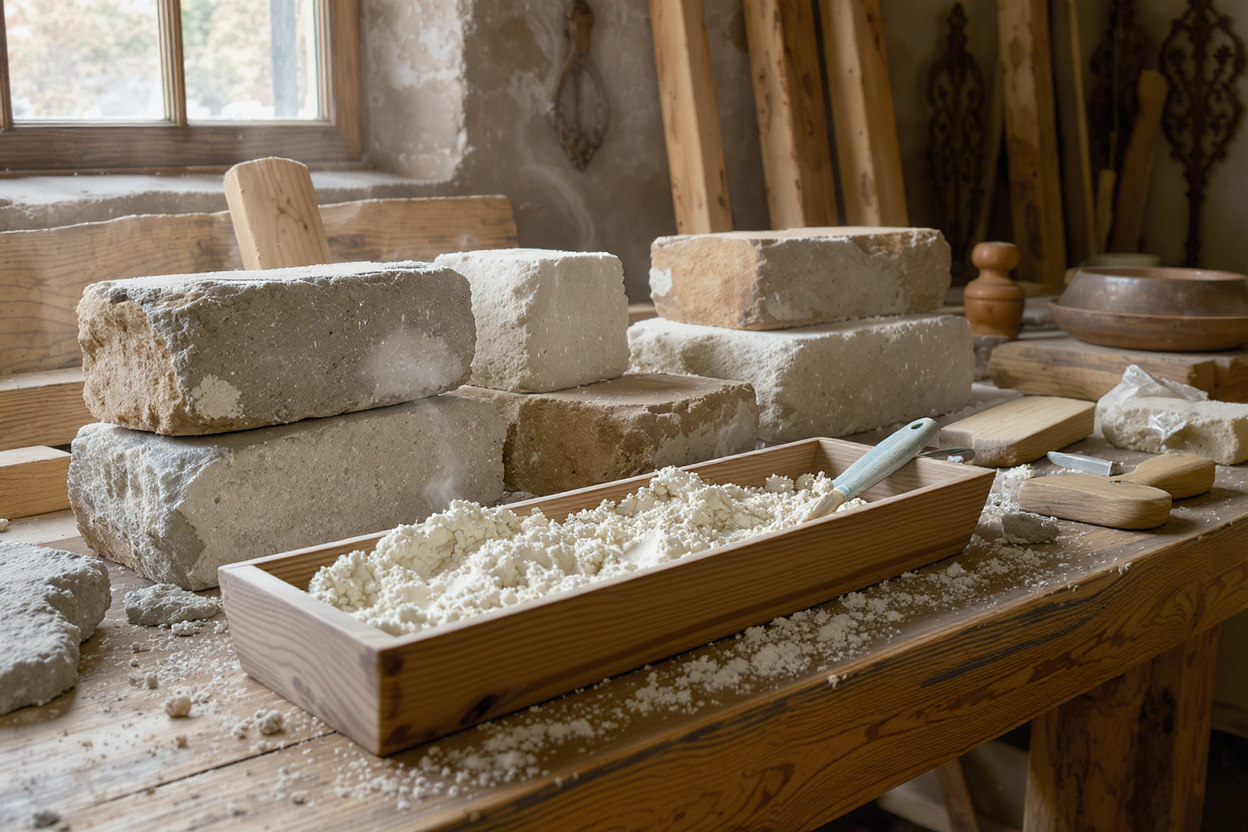
Material compatibility forms the foundation of successful heritage structural strengthening projects. Furthermore, understanding how original and new materials interact ensures both structural integrity and character preservation.
Successful strengthening requires materials that complement rather than conflict with original construction. Traditional lime mortars, natural stones, and historical timber species provide compatible strengthening options that respect the building’s original structural philosophy.
Lime mortars, for example, provide flexibility and breathability that cement-based products cannot match. Therefore, repairs using lime mortars allow for natural building movement while maintaining structural integrity. Similarly, timber repairs using species that match original construction ensure consistent performance characteristics.
Heritage-grade materials often require sourcing from specialist suppliers who understand conservation requirements. However, the investment in compatible materials protects both structural integrity and heritage value over the long term.
Chemical compatibility prevents deterioration caused by adverse reactions between materials. Galvanic corrosion, salt crystallisation, and alkali-silica reactions can all damage historic structures when incompatible materials are used.
Thermal expansion matching ensures that strengthening materials move harmoniously with original elements. Therefore, mismatched expansion rates can create stress concentrations that cause cracking or failure. Additionally, vapour permeability differences can trap moisture and accelerate decay.
Finding appropriate materials often requires extensive research and specialist suppliers. Moreover, authentic materials may need to be custom manufactured or salvaged from similar buildings.
Reclaimed materials often provide the best compatibility with original construction. Salvaged timbers, for instance, have similar moisture content and dimensional stability to existing structural elements. Therefore, they integrate seamlessly with original construction while providing necessary strengthening.
Local quarries may still produce stone that matches original construction materials. Additionally, traditional craftspeople often know sources for historical materials that are not widely advertised.
Successful heritage strengthening combines traditional construction wisdom with contemporary engineering analysis. Moreover, this hybrid approach ensures that interventions respect historical construction methods while achieving modern performance standards.
Traditional builders developed construction techniques over centuries of trial and refinement. Therefore, these methods embody practical solutions to structural challenges that modern engineers should respect and understand.
Historical construction often incorporated clever solutions for dealing with foundation settlement, thermal movement, and moisture management. Consequently, understanding these solutions helps engineers develop sympathetic structural strengthening strategies.
Contemporary technology can enhance traditional construction without overwhelming it. Furthermore, careful integration ensures that modern interventions support rather than replace traditional systems.
Digital documentation techniques, such as 3D scanning and photogrammetry, provide detailed records that support both assessment and future maintenance. Additionally, structural analysis software helps engineers understand complex load paths in historic buildings.
Modern quality control ensures that traditional craftsmanship meets contemporary performance requirements. Therefore, combining skilled artisans with engineering oversight delivers optimal results that satisfy both conservation and structural objectives.
Quality control systems must account for the variability inherent in traditional materials and methods. Natural stones, timber, and lime mortars all have different properties that require flexible quality standards. Consequently, specification writing must balance performance requirements with material characteristics.
Regular inspection and testing throughout construction ensures that work meets both structural and conservation standards. Moreover, documentation of all work provides valuable records for future maintenance and conservation efforts.
Different heritage building types require tailored structural strengthening approaches based on their construction methods and typical structural challenges. Furthermore, understanding these differences is crucial for developing appropriate interventions.
| Building Element | Common Issues | Strengthening Approach | Expected Outcomes |
|---|---|---|---|
| Masonry walls | Settlement cracks | FRP reinforcement strips | Restored load capacity |
| Timber floors | Deflection, vibration | Hidden steel beams | Improved stiffness |
| Cast iron columns | Corrosion damage | Protective coatings, FRP wrapping | Extended service life |
| Roof structures | Sagging rafters | Discrete steel reinforcement | Weather-tight performance |
| Foundations | Undermining | Micro-pile reinforcement | Stable load transfer |
Victorian buildings often feature solid masonry construction with timber floor systems. Therefore, strengthening approaches must account for the interaction between these different materials. Thermal movement, moisture changes, and long-term settlement all influence structural behaviour.
Cast iron elements require special attention due to their brittleness and susceptibility to corrosion. However, when properly maintained, cast iron can provide centuries of reliable service. Consequently, strengthening strategies should focus on protection rather than replacement wherever possible.
Art Deco buildings often feature reinforced concrete construction that may require structural strengthening due to carbonation or chloride ingress. FRP systems provide excellent solutions for concrete rehabilitation without altering the building’s distinctive architectural lines.
Concrete carbonation reduces the alkalinity that protects steel reinforcement from corrosion. Therefore, strengthening strategies must address both the concrete degradation and the resulting steel corrosion. Additionally, chloride contamination from deicing salts or marine environments accelerates this process.
Structural strengthening of concrete elements often involves surface repairs, cathodic protection, and supplemental reinforcement. Moreover, FRP systems can provide additional capacity while protecting existing reinforcement from further corrosion.
Cape Dutch restoration presents unique challenges due to the distinctive construction methods used by colonial builders. Thick masonry walls, heavy timber floors, and traditional thatched roofs require specialised approaches.
These buildings often feature walls constructed with local stone and clay-based mortars. Therefore, strengthening interventions must be compatible with these traditional materials. Additionally, the massive walls provide excellent thermal mass that should be preserved.
Roof structures in Cape Dutch buildings typically use large timber members joined with traditional carpentry techniques. Consequently, strengthening approaches should preserve these joints while providing additional support where needed.
Masonry strengthening focuses on improving tensile capacity and crack resistance. Stone and brick construction excels in compression but lacks tensile strength. Therefore, FRP reinforcement can dramatically improve masonry performance by providing tensile capacity.
Timber frame strengthening typically addresses connection failures and member deflection. Traditional timber joints rely on precise carpentry and natural material properties. Consequently, strengthening approaches should support these connections rather than bypass them.
Each material system requires specialised approaches that respect its structural characteristics. Moreover, understanding the load paths in traditional construction helps engineers develop effective structural strengthening strategies.
South Africa’s unique climate and regulatory environment creates specific challenges for heritage building structural strengthening projects. Additionally, local conditions and materials availability significantly influence project approaches.
The country’s diverse climate zones significantly affect heritage building performance. Coastal areas experience high humidity and salt exposure, while inland regions face extreme temperature variations. Therefore, strengthening materials must be selected to withstand these challenging conditions.
Cape Town’s maritime climate creates unique challenges for heritage buildings. Salt-laden air accelerates corrosion of metal elements while high humidity promotes biological growth. Consequently, strengthening strategies must address these environmental factors.
The Highveld’s temperature extremes cause significant thermal movement in building materials. Daily temperature swings can exceed 20°C, creating stress cycles that fatigue structural elements. Additionally, hail storms and strong winds place additional loads on roof structures.
Drought conditions followed by heavy rainfall create challenging conditions for foundation stability. Clay soils expand and contract with moisture changes, potentially causing foundation movement. Therefore, structural strengthening projects must account for these soil conditions.
Heritage strengthening projects must comply with provincial heritage legislation and municipal planning requirements. The National Heritage Resources Act provides the framework for heritage protection, while provincial and local authorities implement specific requirements.
Obtaining appropriate approvals requires detailed documentation of proposed interventions and their impact on heritage significance. Heritage Impact Assessments must demonstrate that strengthening works will not compromise the building’s heritage value. Furthermore, the approval process can take several months and requires specialist heritage consultant input.
Building control authorities must also approve structural strengthening work to ensure compliance with current building regulations. Therefore, projects must satisfy both heritage conservation requirements and contemporary safety standards.
Working with heritage authorities requires clear communication and thorough documentation. Moreover, early engagement with heritage consultants and approval bodies helps streamline the approval process.
Local material availability influences strengthening approach selection. Traditional building materials like natural stone, lime, and timber are still available from local suppliers who understand heritage requirements.
The Western Cape has several quarries that produce stone similar to that used in historical construction. Additionally, lime production continues at sites that have supplied building materials for centuries. Therefore, authentic materials remain available for heritage projects.
Specialised heritage conservation materials are increasingly available through dedicated suppliers. These suppliers often import materials that are not available locally but are essential for proper conservation work. However, imported materials may have long lead times and higher costs.
Cape Winelands construction projects often require materials that match the regional building tradition. Local suppliers understand these requirements and can provide appropriate materials and advice. Furthermore, the concentration of heritage buildings in the region supports a network of specialist suppliers and contractors.
Emerging technologies continue to expand options for heritage building structural strengthening. Furthermore, these advanced techniques offer new possibilities for minimally invasive interventions.
Micro-piles provide foundation strengthening with minimal disruption to existing structures. These small-diameter piles can be installed through existing floors and foundations. Therefore, they offer solutions for foundation problems without major excavation work.
The installation process uses specialised drilling equipment that can work in confined spaces. Additionally, micro-piles can be installed at angles to address lateral loads and overturning moments.
Post-tensioning can provide structural strengthening while remaining completely hidden within existing structure. High-strength cables or bars are tensioned to provide additional structural capacity. Moreover, these systems can address both gravity loads and lateral forces.
External post-tensioning systems can strengthen beams and slabs without altering internal spaces. The tendons are housed in protective ducts that can be concealed within architectural features. Consequently, structural capacity increases without visible alterations.
Shape memory alloys offer unique properties that make them suitable for heritage applications. These materials can provide active strengthening that responds to structural movement. Therefore, they offer possibilities for self-regulating structural systems.
The technology is still developing but shows promise for applications where traditional strengthening methods are not suitable. Additionally, the ability to provide strengthening only when needed reduces the visual impact on historic structures.
Heritage structural strengthening projects face predictable challenges that can be addressed through careful planning and appropriate techniques. Moreover, understanding these challenges helps project teams develop effective strategies.
Historic buildings often have limited access for construction equipment and materials. Narrow doorways, low ceilings, and confined spaces restrict the size of equipment that can be used. Therefore, strengthening techniques must be compatible with these constraints.
Manual installation techniques become necessary where machinery cannot access work areas. This requirement increases labour costs but ensures that strengthening work can proceed without damaging historic fabric. Additionally, careful planning can minimise the impact of access limitations.
Historic buildings often have structural elements hidden within walls, floors, and ceilings. These concealed elements may not be accurately documented, creating surprises during construction. Consequently, strengthening projects must include allowances for unexpected discoveries.
Non-destructive investigation techniques can reveal hidden structural elements before construction begins. Ground-penetrating radar, endoscopic inspection, and thermal imaging all provide insights into concealed construction. Therefore, thorough investigation reduces the risk of unexpected discoveries.
Conservation principles often require that structural strengthening interventions be reversible. This requirement ensures that future generations can modify or remove strengthening elements if better techniques become available. Moreover, reversibility provides flexibility for changing building uses.
Mechanical connections generally provide better reversibility than bonded systems. Bolted connections, clamps, and brackets can be removed without damaging historic fabric. However, these connections may be more visible than bonded systems.
Heritage structural strengthening projects require careful financial planning to balance conservation objectives with budget constraints. Furthermore, the specialist nature of this work typically results in higher costs than conventional construction.
Structural strengthening costs vary significantly based on building complexity and intervention requirements. Therefore, detailed assessment is essential for accurate cost estimation.
Moreover, heritage projects often uncover unexpected conditions that require additional work. Contingency allowances of 20-30% are typically necessary to accommodate these discoveries.
Heritage projects generally require longer timeframes than conventional construction. Assessment phases, regulatory approvals, and specialist work methods all extend project duration. Additionally, seasonal weather considerations may affect scheduling for certain types of work.
The assessment phase typically requires 6-12 weeks depending on building complexity. Heritage approval processes can take 3-6 months, particularly for significant heritage buildings. Therefore, project planning must account for these extended timeframes.
Successful projects require collaboration between structural engineers, heritage consultants, and specialist contractors. Each professional brings essential expertise that contributes to project success. Furthermore, early engagement with all team members helps identify potential issues before they become problems.
Structural engineers with heritage experience understand the unique challenges of historic building strengthening. They can develop structural strengthening strategies that balance structural requirements with conservation objectives. Moreover, their experience with heritage approval processes helps streamline project delivery.
Heritage consultants provide essential expertise in conservation principles and regulatory requirements. They help navigate the approval process and ensure that proposed work complies with heritage legislation. Additionally, they can provide valuable insights into the building’s history and significance.
Specialist contractors with heritage experience understand the materials and techniques required for conservation work. They can execute strengthening work with the care and precision that heritage buildings require. Furthermore, their experience helps avoid common pitfalls that can damage historic fabric.
Protect your heritage building’s character while ensuring structural safety. Our conservation-focused structural engineers specialise in strengthening solutions that preserve historical authenticity. Contact us today for a comprehensive heritage-sensitive structural assessment and discover how modern engineering can enhance your building’s performance without compromising its unique character.
Character-preserving structural strengthening requires a delicate balance between engineering excellence and conservation principles. Modern technologies, particularly FRP systems, offer unprecedented opportunities to enhance structural performance while maintaining heritage authenticity. However, success depends on comprehensive assessment, material compatibility, and skilled implementation by experienced conservation professionals.
The future of heritage building preservation lies in embracing innovative strengthening technologies that respect the past while meeting contemporary performance requirements. Therefore, property owners who invest in appropriate strengthening solutions protect both their building’s heritage value and its long-term structural integrity.
Structural strengthening of heritage buildings will continue to evolve as new technologies emerge and our understanding of historic construction improves. Moreover, the growing recognition of heritage buildings’ cultural and economic value ensures continued investment in their preservation. Consequently, the field will continue to develop new techniques that balance conservation requirements with structural performance needs.
Working with experienced professionals who understand both structural engineering and heritage conservation is essential for successful outcomes. At JDV Construction, we bring together expertise in traditional craftsmanship and modern engineering to deliver strengthening solutions that preserve character while enhancing performance. Our portfolio of successful heritage projects demonstrates our commitment to balancing preservation with structural safety.
~ JDV Construction