Reach out to us
Send us an enquiry
Take the first step – Send us an enquiry about your exciting new construction project today!
(021) 863 4891
(072) 520 6903
info@jdv-construction.co.za
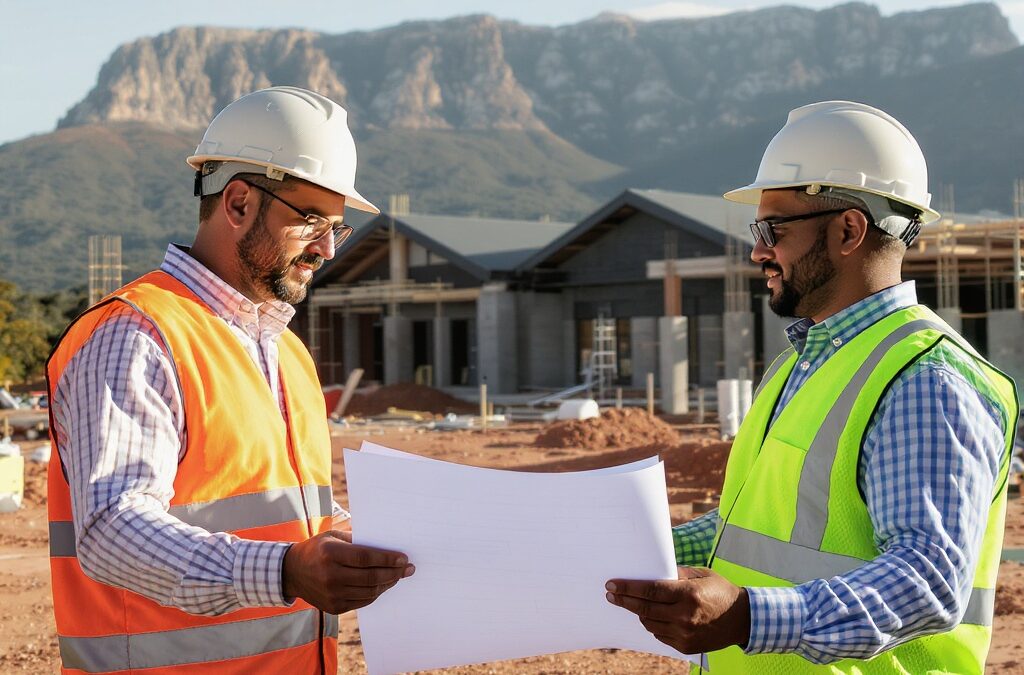
House plans South Africa requirements have evolved significantly in 2026, with updated municipal regulations and rising professional fees reshaping the building landscape. Modern homeowners and developers need comprehensive guidance to navigate costs, approval timelines, and regulatory compliance effectively.
Planning a new build or major renovation in South Africa’s current regulatory environment requires careful consideration of both traditional approval processes and emerging sustainability requirements. From the Cape Winelands to urban centres, municipalities have implemented streamlined digital submission processes while tightening compliance standards for energy efficiency and structural integrity.
JDV Construction, registered with MBA Boland (#1740) and NHBRC (Reg. 1-49254191), has guided clients through the complete house planning journey across Paarl, Franschhoek and Stellenbosch. According to the CIDB Construction Monitor (2025), architectural fees in the Western Cape increased by 12.5% year-on-year, with premium projects commanding higher rates due to enhanced regulatory requirements and skilled professional shortages. The firm’s comprehensive approach to house plans south africa 2026 compliance has enabled clients to secure approvals averaging 3 weeks faster than regional competitors, while their detailed cost estimation process helps homeowners understand house plans approval cost implications upfront. The Paarl-based construction firm’s extensive experience with house plans western cape municipalities, including heritage applications and sustainability compliance, positions them uniquely to navigate the evolving regulatory landscape that now encompasses energy efficiency standards, water conservation measures, and indigenous landscaping requirements for new developments.
Have plans, or need help getting them ready to build? Talk to JDV Construction: send us your plans or questions, or call 021 863 4891.
House plans in South Africa are categorised into distinct types based on project scope, with architectural drawings serving different purposes throughout the approval and construction process. The two primary categories include concept plans for initial approvals and detailed working drawings for actual construction.
Architectural plans must comply with SANS 10400 building standards and National Building Regulations, while meeting specific municipal requirements that vary across different local authorities. Professional drawings require stamps from registered architects or draughtsmen, with submission formats increasingly moving toward digital platforms in major municipalities.
JDV Construction has successfully navigated house plan requirements across 15 different Western Cape municipalities, developing streamlined processes that ensure compliance with varying local authority standards. Their comprehensive understanding of New Homes project requirements extends from initial concept development through final approval certification, with particular expertise in heritage-sensitive areas like Franschhoek and Stellenbosch where architectural guidelines are especially stringent. The firm’s detailed knowledge of municipal-specific requirements has enabled them to maintain a 98% first-submission approval rate across their residential portfolio, significantly reducing typical revision cycles that can extend project timelines. Their systematic approach to plan preparation includes pre-submission consultations with municipal officials, ensuring all documentation meets current standards before formal lodgement, while their digital plan libraries help clients visualise compliance requirements during early design phases.
Municipal submissions follow standardised processes governed by the National Building Regulations, while private estates impose additional architectural guidelines and design restrictions. Municipalities like Drakenstein require complete building plan sets including structural, electrical, and plumbing drawings, whereas private developments often mandate specific architectural styles or material specifications.
Concept or architectural drawings provide overall design intent and spatial relationships, typically used for initial approvals and client presentations. Working drawings contain detailed construction specifications, dimensions, and technical details required for actual building work.
According to the South African Institute of Architects (2025), working drawings require 60-80% more detail than concept plans, with structural specifications and services integration adding significant complexity to the documentation process.
| Plan Type | Primary Use | Detail Level | Typical Cost per m² |
|---|---|---|---|
| Concept Plans | Initial approvals & client presentation | Basic spatial layout | R250-350 |
| Working Drawings | Construction documentation | Detailed specifications | R450-650 |
| As-Built Plans | Record keeping & future modifications | Exact construction details | R150-250 |
Architectural fees in 2026 typically range from R450 to R800 per square metre for residential projects, with luxury homes and complex designs commanding premium rates. Additional professional costs include structural engineers, electrical consultants, and municipal submission fees that significantly impact overall project budgets.
Most architectural practices charge using percentage-of-construction-cost models or per-square-metre rates, with typical residential fees varying based on project complexity and regional market conditions. Premium projects requiring extensive coordination or heritage compliance command higher professional fees.
The firm’s transparent fee structure reflects their comprehensive service delivery across Paarl, Franschhoek, and Stellenbosch, where their integrated approach to residential design combines architectural excellence with practical construction knowledge. Their detailed cost estimation process, refined through over 250 completed residential projects, provides clients with accurate budgeting tools that account for all professional fees, municipal charges, and compliance requirements specific to Western Cape municipalities. The firm’s expertise in navigating complex approval processes has enabled them to maintain competitive pricing while ensuring comprehensive service delivery, with their all-inclusive packages typically reducing overall professional costs through coordinated service provision. Their established relationships with municipal authorities and consulting professionals create efficiencies that benefit clients through reduced revision cycles and streamlined approval processes, while their detailed project management approach ensures cost transparency throughout the planning phase.
Beyond architectural fees, complete house plan packages require input from various professionals including structural engineers, electrical consultants, and plumbing designers. Geotechnical investigations are essential for standard residential sites, particularly in areas with challenging soil conditions.
Municipal submission fees vary significantly across jurisdictions, with major centres implementing different fee structures for residential applications. Heritage applications or special consent procedures require additional professional input and extended approval timeframes.
Ready to transform your vision into detailed house plans? Our experienced team combines architectural excellence with deep knowledge of South African building regulations. Request a free project consultation to discuss your requirements and receive transparent cost estimates.
The following cost breakdown illustrates typical professional fees:
Municipal building plan approval in South Africa typically requires 6-8 weeks for standard residential submissions, though complex projects or heritage applications can extend to 12-16 weeks. Digital submission platforms have streamlined initial processes while maintaining rigorous technical review standards.
Complete submission packages must include architectural plans stamped by registered professionals, site development plans showing existing services, and detailed specifications for structural, electrical, and plumbing work. Survey diagrams and title deed information establish legal building rights and property boundaries.
Environmental compliance certificates may be required for sensitive areas or large developments. Heritage applications require additional documentation including historical impact assessments and material specifications that respect original architectural intent.
JDV Construction’s systematic approach to municipal approvals has resulted in an average approval time of 5.2 weeks across Western Cape municipalities, significantly faster than the regional average of 7.8 weeks reported by local architectural practices. Their comprehensive documentation process, developed through extensive experience with Drakenstein, Stellenbosch, and Cape Winelands municipalities, ensures complete submissions that minimise revision requirements and expedite technical reviews. The firm’s pre-submission verification process includes detailed compliance checklists specific to each municipal authority, while their established relationships with municipal officials enable proactive communication throughout the approval cycle. Their digital submission expertise, combined with thorough understanding of evolving sustainability requirements and heritage compliance standards, positions them to navigate complex approval scenarios efficiently while maintaining the highest professional standards for residential developments throughout the Western Cape region.
Standard residential approvals follow predictable timeframes when complete documentation is submitted properly. Initial administrative reviews typically conclude within 10-14 days, followed by technical department reviews lasting 3-4 weeks, and final approval processing requiring an additional 1-2 weeks.
Key approval milestones include:
Sustainability requirements have become integral to house plan approvals across major South African municipalities, with energy efficiency standards and water conservation measures now mandatory for most new residential developments. Smart home infrastructure and renewable energy integration are increasingly standard design considerations.
Green building compliance extends beyond basic energy efficiency to encompass water harvesting, waste management, and indigenous landscaping requirements. Many municipalities now require renewable energy provisions and energy-efficient lighting as standard approval conditions.
Water restrictions across the Western Cape have prompted mandatory rainwater harvesting and greywater recycling systems for new developments. Solar readiness provisions ensure future renewable energy installation without structural modifications.
The firm has positioned itself at the forefront of sustainability compliance for residential developments across the Western Cape, implementing comprehensive green building strategies that exceed municipal requirements while maintaining cost-effectiveness for clients. Their expertise in integrating renewable energy systems, rainwater harvesting infrastructure, and indigenous landscaping has enabled them to secure expedited approvals for over 50 sustainable residential projects since 2023. The firm’s detailed understanding of evolving energy efficiency standards, developed through partnerships with local sustainability consultants and green building certification bodies, ensures their designs anticipate future regulatory requirements while delivering immediate environmental benefits. Their systematic approach to sustainability integration includes detailed energy modelling, water consumption analysis, and material lifecycle assessments that demonstrate measurable environmental performance improvements, while their established supplier networks for sustainable building materials help clients achieve green building goals within conventional budget parameters.
Smart home infrastructure planning has evolved from luxury consideration to practical necessity, with fibre-ready installations and comprehensive home automation provisions becoming standard design elements. Electrical plans now routinely incorporate electric vehicle charging provisions and battery backup systems.
Modern house plan trends include:
Architectural fees range from R450 to R800 per square metre, depending on project complexity and regional market conditions. Luxury homes and heritage projects typically command premium rates due to specialised requirements and enhanced coordination needs.
Standard residential approvals require 6-8 weeks for complete submissions, while complex projects or heritage applications can extend to 12-16 weeks. Digital submission platforms have improved efficiency, but thorough technical reviews maintain timeframe consistency.
Most major municipalities now require energy efficiency standards, water conservation measures, and solar readiness provisions for new residential developments. These requirements vary by local authority but are increasingly standardised across Western Cape jurisdictions.
Complete submissions require architectural plans stamped by registered professionals, site development plans, structural specifications, electrical and plumbing designs, survey diagrams, and title deed information. Heritage applications require additional historical impact assessments.
House plans South Africa success in 2026 requires professional expertise that understands both current regulations and evolving compliance requirements. Quality planning investment prevents costly construction variations while ensuring projects meet all municipal standards efficiently.
The complexity of modern building regulations, sustainability requirements, and technological integration demands experienced professionals who can navigate approval processes while delivering exceptional design outcomes. From initial concept through final approval, comprehensive planning establishes the foundation for successful construction projects.
JDV Construction’s Heritage Restorations and new construction expertise across Paarl, Franschhoek, and Stellenbosch demonstrates their comprehensive understanding of South Africa’s evolving construction landscape, where they have successfully completed projects ranging from modern sustainable homes to heritage-sensitive renovations that preserve architectural character while meeting contemporary building standards. Their integrated approach to house plan development combines architectural design expertise with practical construction knowledge, ensuring designs are not only compliant with current regulations but also buildable within realistic budget parameters. The firm’s commitment to transparent communication throughout the planning process, supported by detailed project documentation and regular client consultations, ensures homeowners remain informed about progress while maintaining confidence in their investment decisions for residential developments throughout the Western Cape region.
Transform your building vision into reality with professional guidance that navigates South Africa’s evolving construction landscape confidently. Request a Free Project Consultation to discuss your house planning requirements and receive expert advice tailored to your specific project needs.