Rising Damp Treatment in Heritage Buildings: Expert Diagnosis Guide
Rising Damp Treatment in Heritage Buildings: Expert Diagnosis Guide
Why Rising Damp Diagnosis Matters in Heritage Buildings
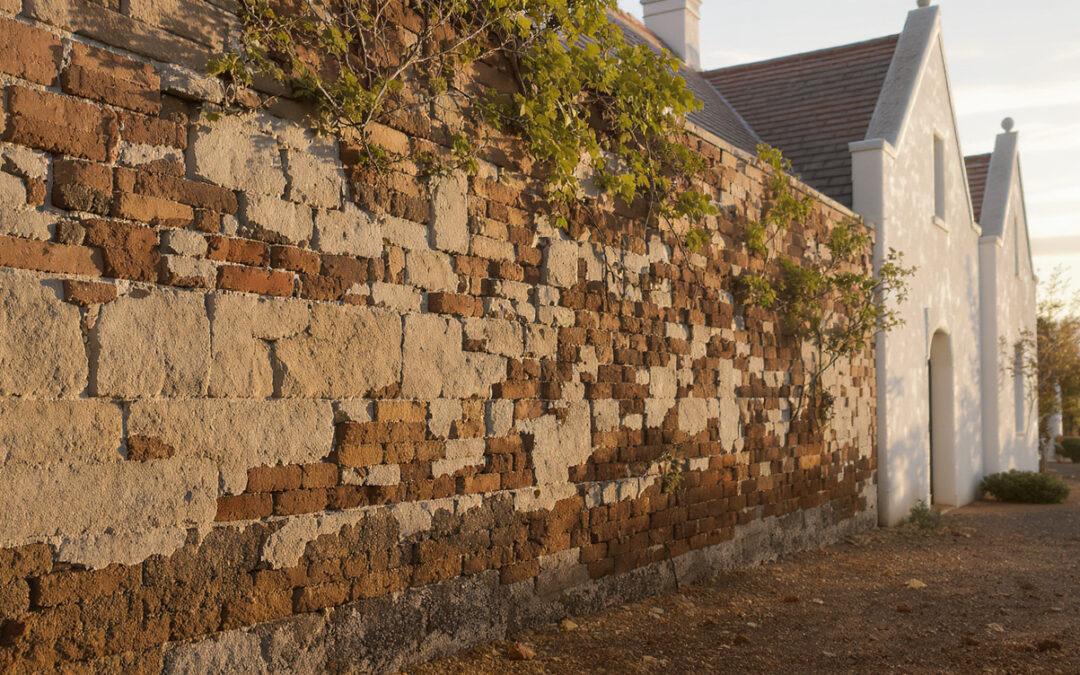
Here’s the uncomfortable truth: rising damp treatment in heritage buildings is one of the most challenging conservation puzzles you will face. Research by building pathologist Tim Hutton reveals that rising damp is “widely misdiagnosed in existing buildings” based on incorrect interpretation of visual evidence and moisture meter readings. This misdiagnosis epidemic particularly affects Cape Winelands heritage properties, where historic construction methods create unique moisture challenges that will have you scratching your head.
The Cost of Misdiagnosis in Heritage Properties
Let’s be real about the financial stakes here. Misdiagnosing moisture problems in heritage buildings can cost property owners tens of thousands of rands in unnecessary treatments that actually make things worse. Moreover, inappropriate treatments can permanently damage irreplaceable historic fabric, and there is no “undo” button for a 200-year-old building. When standard rising damp treatment methods are applied without proper diagnosis, they often fail spectacularly while creating new preservation headaches.
Why Standard Solutions Fail Historic Buildings
Here’s where it gets interesting. Historic buildings in the Cape Winelands were constructed without modern damp proof courses, using traditional materials like clay bricks and lime mortar. Therefore, standard commercial damp-proofing solutions designed for modern construction frequently prove as compatible with heritage materials as oil is with water. Consequently, these buildings require specialised assessment and conservation-appropriate treatment methods that respect their historic character.
Understanding Rising Damp vs Other Moisture Problems
Quick reality check: half the “rising damp” cases we see are not actually rising damp at all.
What Rising Damp Actually Is (Scientific Definition)
Rising damp occurs when groundwater moves upward through porous building materials via capillary action, so think of it as your walls drinking from the ground like a very slow, very destructive straw. This phenomenon typically affects walls to a maximum height of 1.5 meters, creating a distinct horizontal moisture line. However, many moisture problems in heritage buildings are incorrectly attributed to rising damp when they actually stem from completely different sources.
Common Moisture Problems Mistaken for Rising Damp
Several moisture problems frequently masquerade as rising damp in heritage buildings, fooling even experienced contractors:
- Penetrating damp from defective gutters or downpipes
- Condensation issues caused by poor ventilation
- Hygroscopic salt contamination creating persistent moisture readings
- Failed pointing allowing lateral moisture penetration
- Plumbing leaks within wall cavities
Visual Evidence: What to Look For vs What Is Misleading
Genuine rising damp creates specific patterns that differ from other moisture problems, but this is where it gets tricky. Salt contamination often confuses visual diagnosis because salts remain hygroscopic, or moisture-attracting, even after the original moisture source is eliminated. Professional assessment therefore requires understanding these complex interactions between moisture and building materials.
True Rising Damp Indicators:
- Moisture extending from ground level upward to maximum 1.5 m height
- Consistent horizontal moisture line across affected walls
- Seasonal variations in moisture levels
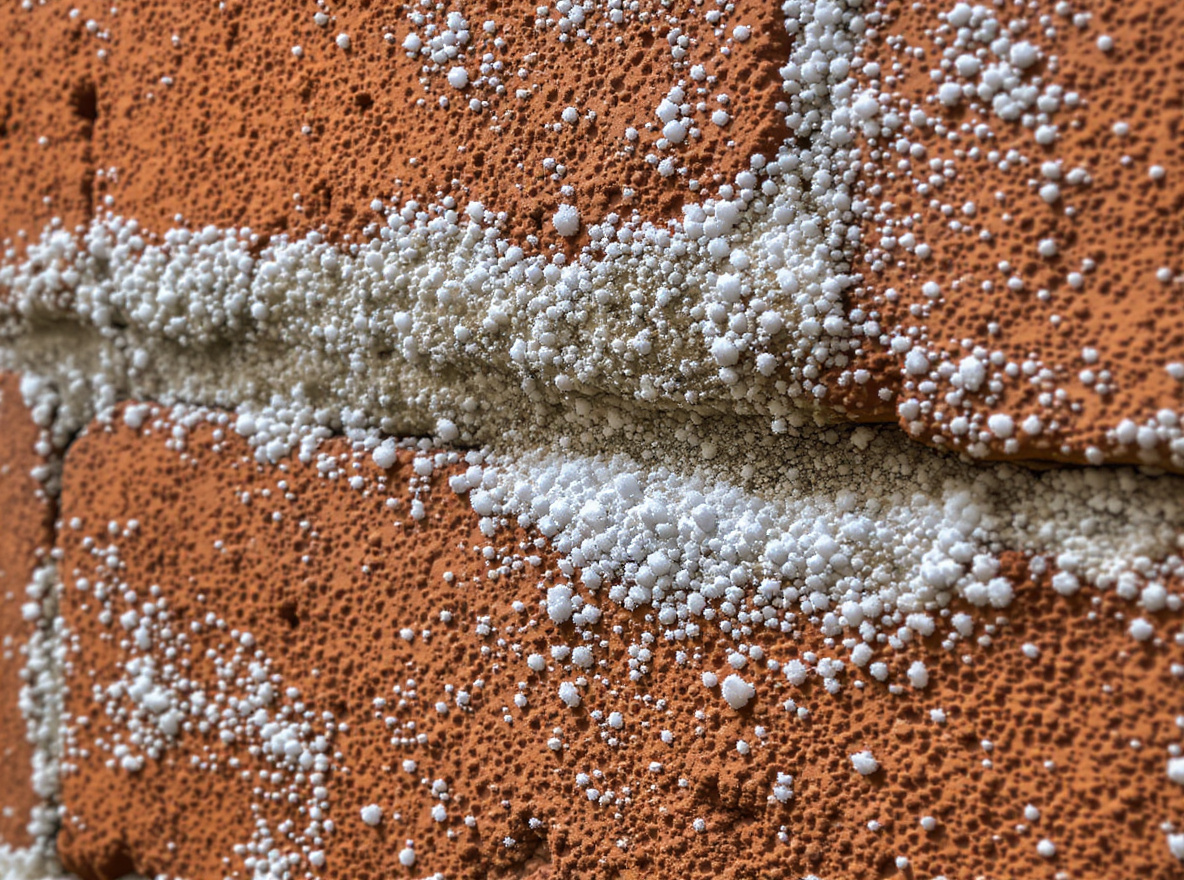
- Salt crystallisation patterns at the evaporation zone
The Salt Attack Factor: Why Heritage Buildings Need Special Rising Damp Treatment
Here is the plot twist that makes heritage buildings special: it is not just about the damp.
How Rising Damp Activates Historic Building Salts
Research by Ahmad et al (2010) demonstrates that rising damp creates a cascading deterioration effect in heritage buildings by mobilising existing salts within historic materials. Moreover, groundwater containing dissolved salts penetrates building walls, depositing additional mineral content as moisture evaporates. This salt attack significantly complicates both diagnosis and treatment, so you are not just fighting moisture, you are battling chemistry.
Salt Crystallisation Damage Patterns
Salt crystallisation creates distinctive damage patterns in heritage masonry that will make your heart sink. Consequently, these patterns often persist even after successful moisture treatment because salts continue attracting atmospheric moisture like tiny, destructive magnets. Furthermore, the crystallisation pressure from expanding salts can cause permanent structural damage to historic brickwork and mortar joints.
Why This Changes Rising Damp Treatment Requirements
Traditional rising damp treatment methods focus solely on moisture control, but that is only half the battle. Heritage buildings instead require integrated approaches that address both moisture sources and salt contamination at the same time. Therefore, effective rising damp treatment must include salt removal or neutralisation alongside moisture management strategies.
Professional Diagnostic Methods for Heritage Properties
Let us talk about getting beyond guesswork and into proper science for rising damp treatment.
Beyond Moisture Meters: Proper Assessment Tools
Standard moisture meters frequently provide misleading readings in heritage buildings due to salt contamination, so they are essentially reading the salt, not the actual moisture content. However, advanced diagnostic techniques like impedance tomography offer more accurate moisture mapping without invasive drilling. Additionally, gravimetric moisture analysis provides definitive moisture content measurements for heritage materials.
Heritage-Safe Investigation Techniques
Professional moisture assessment in heritage buildings requires non-destructive investigation methods that will not leave your historic walls looking like Swiss cheese. Therefore, thermal imaging, microwave moisture detection, and capacitance-based sensors minimise damage to historic fabric while providing comprehensive diagnostic data.
Diagnostic Checklist for Property Owners
- Document moisture patterns with photographs showing full wall height.
- Record seasonal variations in moisture levels over 12-month periods.
- Check external drainage systems and guttering for defects.
- Examine internal plumbing for potential leaks.
- Assess ventilation adequacy in affected areas.
- Identify salt crystallisation patterns and locations.
- Review the building’s construction history and previous treatments.
Traditional Rising Damp Treatments: Wall Base Ventilation Methods
Wall base ventilation sounds simple, but there is more to it than meets the eye.
Passive Ventilation Systems
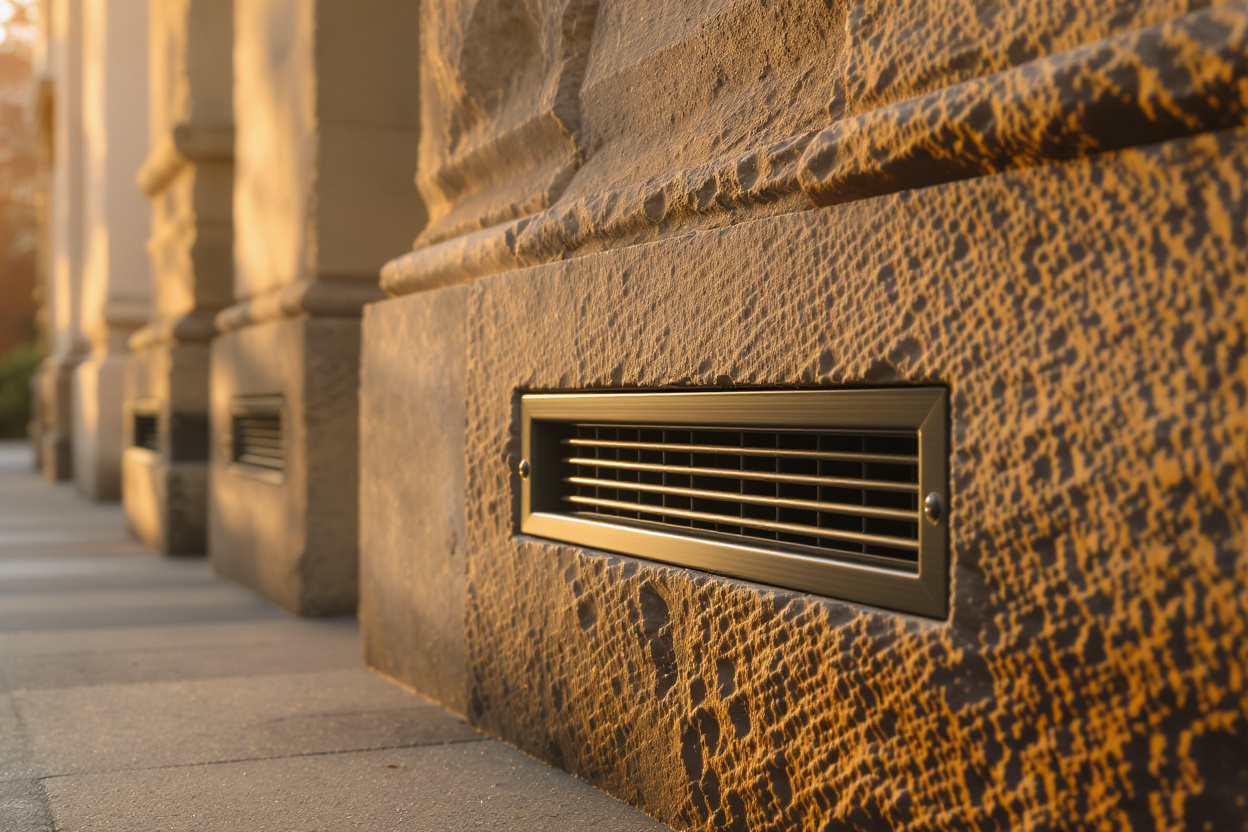
Passive wall base ventilation relies on natural airflow to remove moisture from wall bases, essentially creating a gentle breeze at ground level. Research by Franzoni (2018) demonstrates significant effectiveness in reducing moisture levels in historic masonry. However, success depends on adequate ventilation differential and proper system design.
Active Wall Base Ventilation
Active systems use mechanical fans to enhance air circulation at wall bases, which provides more consistent results than passive methods. These systems work particularly well in buildings with limited natural ventilation. Furthermore, active systems can be adjusted seasonally to optimise performance.
Effectiveness in Heritage Applications
Ventilation System Comparison:
| Method | Effectiveness | Heritage Impact | Maintenance |
|---|---|---|---|
| Passive Ventilation | 60–70% | Minimal | Low |
| Active Ventilation | 75–85% | Moderate | Medium |
Modern Rising Damp Treatment Technologies: Electro-Osmosis and Chemical DPC
Welcome to the cutting-edge world of rising damp treatment. Yes, that is a real thing.
Electro-Osmosis Systems for Heritage Buildings
Recent studies by Koca (2024) examine electro-osmosis effectiveness over extended periods in historic buildings, essentially using electrical fields to convince moisture to flow away from wall bases. This technology shows promise for rising damp treatment, but long-term validation studies continue to assess performance reliability in heritage applications.
Hydrophobic Pore-Filling Resins
Research by Alfano (2023) investigates hydrophobic pore-filling resins for treating rising damp in wet conditions. These treatments create moisture barriers within existing masonry without structural modification, so you can think of it as waterproofing from the inside. Nevertheless, material compatibility with historic mortars requires careful evaluation.
Chemical DPC Injection: Heritage Considerations
Chemical damp proof course injection involves introducing moisture-repelling compounds into wall bases. While this is effective in modern construction, heritage applications require specialised formulations compatible with lime mortars and historic bricks, so you cannot just use any old chemical and hope for the best.
Long-term Effectiveness Studies (2010–2024)
The technology evolution timeline reveals significant advances in heritage-appropriate treatments over the past decade. However, comprehensive effectiveness data remains limited for newer technologies like electro-osmosis in historic building contexts.
Treatment Technology Comparison:
| Treatment | Success Rate | Invasiveness | Heritage Suitability |
|---|---|---|---|
| Wall Base Ventilation | 70–80% | Low | Excellent |
| Electro-osmosis | 60–75%* | Very Low | Good |
| Chemical DPC | 85–95% | Medium | Limited |
*Requires longer-term validation.
Treatment Selection Matrix: Choosing the Right Rising Damp Treatment Method
Here is where the rubber meets the road: picking the right rising damp treatment for your specific building.
Heritage Building Constraint Assessment
Treatment selection must consider multiple heritage-specific factors that do not apply to modern buildings. Building age, construction materials, preservation status, and conservation officer requirements all influence appropriate treatment choices. Therefore, comprehensive assessment always precedes treatment selection.
Treatment Effectiveness Comparison
Different rising damp treatment options suit different heritage building scenarios, so there is no one-size-fits-all solution. Consequently, building age, wall thickness, ground conditions, and salt contamination levels all determine the optimal treatment approach. In many cases, combining wall base ventilation with careful salt management offers a good balance between effectiveness and heritage impact.
Cost-Benefit Analysis Framework
When choosing a rising damp treatment method, you should weigh initial costs against long-term performance and heritage risk:
- Initial installation cost: labour, access, and specialist equipment.
- Ongoing maintenance: fan replacement, vent cleaning, and monitoring.
- Heritage impact: reversibility, visibility of interventions, and risk to original fabric.
- Performance over time: how the system copes with seasonal changes and rising groundwater.
By mapping these factors in a simple matrix, property owners and conservation professionals can compare options side by side before committing to permanent changes.
Implementation Considerations for Heritage Properties
Even the best rising damp treatment plan can fail if implementation ignores heritage constraints.
Conservation Officer Requirements
Listed or formally protected heritage buildings often require approval before any damp treatment can start. Therefore, you should engage your local conservation officer early in the process. Clear documentation of moisture diagnostics, proposed methods, and expected impacts on historic fabric will help secure approvals and avoid delays.
Minimal Intervention Principles
Heritage conservation practice follows the principle of minimal intervention. In practical terms, that means:
- Prioritising reversible rising damp treatment methods.
- Avoiding unnecessary removal of original plaster, lime render, or brickwork.
- Matching any replacement materials to the original in composition and performance.
Whenever possible, you should retain historic finishes and improve drainage, ventilation, and salts management first, rather than resorting to highly invasive structural work.
Monitoring and Maintenance
Rising damp treatment in heritage buildings is not a one-off job. Instead, it is an ongoing process of monitoring and adjustment. Simple maintenance steps include:
- Regularly checking vents and drainage for blockages.
- Recording moisture readings at fixed points every season.
- Inspecting for new salt crystallisation or flaking finishes.
Consistent monitoring allows early correction if a system underperforms, which protects your building and your budget.
Getting Professional Assessment Right
Rising damp treatment in heritage buildings sits at the intersection of building science and conservation ethics. Misdiagnosis is common, and the cost of getting it wrong can be severe, both financially and in terms of lost historic fabric. However, with careful moisture diagnostics, salt analysis, and heritage-sensitive treatment selection, you can control rising damp without sacrificing what makes your building unique.
If you own or manage a heritage property and suspect rising damp, do not rely on guesswork or off-the-shelf solutions. Instead, seek out specialists who understand both moisture diagnostics and conservation practice, and insist on a clear, evidence-based treatment plan before any work begins.
~JDV Construction